
Superior Court Public Records are official documents created during legal proceedings in state trial courts across the United States. These records include case filings, motions, judgments, docket entries, hearing schedules, and court orders. Most superior courts operate under state laws that guarantee public access to these materials unless specifically sealed by statute or court order. Whether you’re researching a civil dispute, checking criminal history, or verifying property disputes, knowing how to locate and request superior court records saves time and ensures accuracy. This page covers every major aspect of accessing superior court public records—from in-person visits to online portals—with up-to-date procedures, fees, and contact details for key jurisdictions.
What Are Superior Court Public Records?
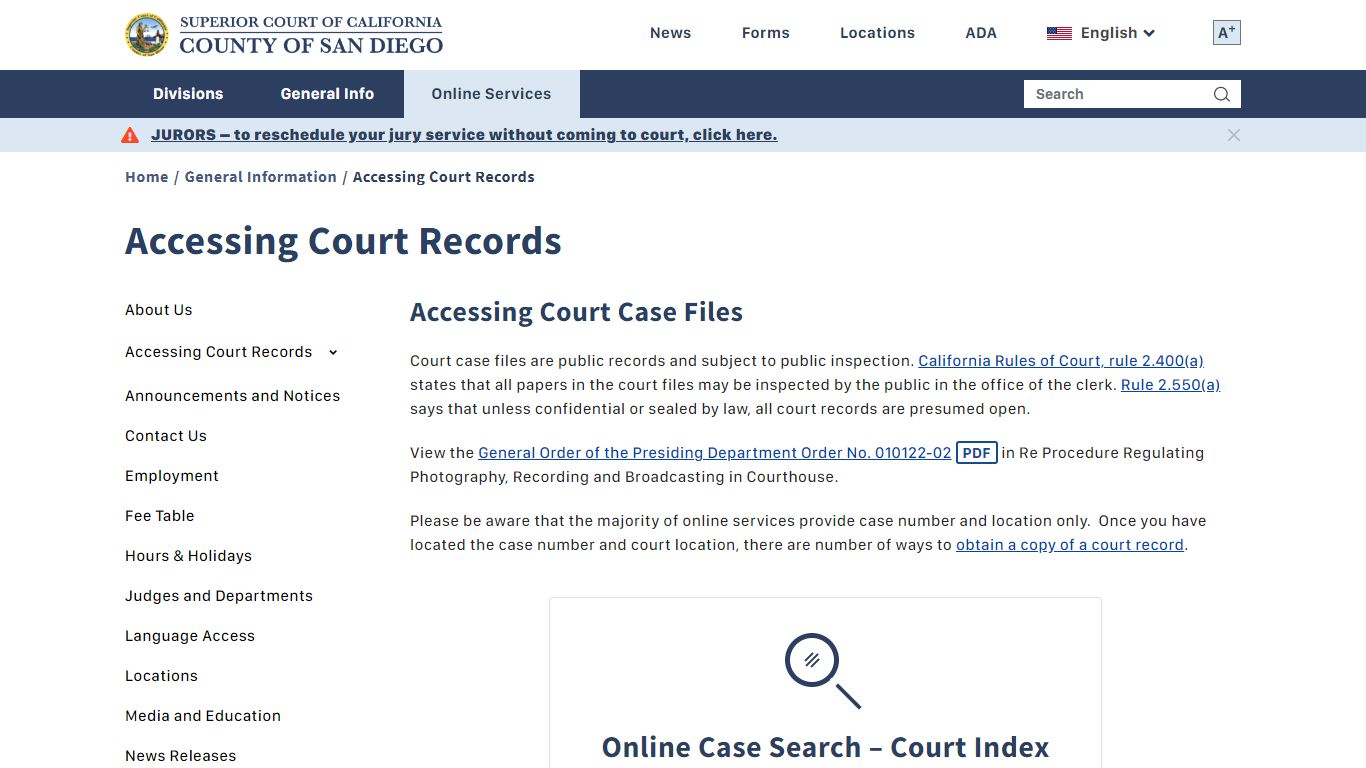
Superior Court Public Records refer to any document filed with or issued by a state-level trial court designated as a “superior court.” These courts handle serious criminal cases, major civil lawsuits, family law matters, probate, and juvenile proceedings (unless handled separately). Records may exist in paper or electronic form and typically include complaints, answers, motions, exhibits, transcripts, sentencing documents, and final judgments. Under California Rules of Court rule 2.400(a), all such papers are presumed open unless sealed by law—such as juvenile records, certain protective orders, or confidential settlements. Other states follow similar principles based on their own statutes and court rules.
These records serve multiple purposes: background checks, legal research, due diligence for real estate transactions, verifying criminal history, or monitoring ongoing litigation. Many people mistakenly believe only attorneys can access them, but most jurisdictions allow any member of the public to view or copy records during business hours. Some courts also offer online search tools, though availability varies widely by county and state.
How to Request Superior Court Public Records In Person
Visiting the clerk’s office remains the most reliable way to obtain complete or certified copies of superior court records. Most clerks require you to provide specific case identifiers—like the case number or full names of parties involved—to locate files quickly. For example, the San County Superior Court in California requires use of form CR-001, which must include the case number, party names, and a $5 processing fee per document. The office at 500 Elm Street, San County, CA 94102, is open Monday through Friday from 8 a.m. to 4 p.m.
In Maricopa County, Arizona, the Clerk of Superior Court maintains dockets for civil, criminal, probate, and family law cases. Visitors must complete a Record Request Form, show valid photo ID, and pay fees ranging from $0.25 per page for basic documents to $15 for certified copies. Same-day service is available for filings made within the last 24 hours. Always call ahead to confirm hours, required forms, and accepted payment methods—some offices reject cash or personal checks.

Online Access to Superior Court Public Records
Many superior courts now offer digital access to case information through secure online portals. The Arizona Judicial Branch provides a statewide Public Access Case Lookup covering 177 of 184 courts. Users search by case number, party name, or filing date to retrieve docket entries, judgments, and calendars. A two-step verification process—email plus one-time passcode sent to a mobile device—ensures security while allowing broad access. The system clearly marks sealed or restricted cases to comply with confidentiality laws.
California’s Riverside County offers an online portal with criminal and traffic records dating back to 1990 for felonies and 1994 for misdemeanors. Users filter results by case type, date, or defendant name and download PDF judgments. Imperial County’s “CourtConnect” platform lets users download up to 150 recent documents per case directly. If more are needed, a written request must specify titles and dates, fulfilled within 10 business days via CD-ROM or secure link. All files are PDF/A compliant for long-term preservation.
Fees and Payment Methods for Court Records
Fees for superior court public records vary significantly by jurisdiction and document type. Basic copies often cost between $0.25 and $1.00 per page, while certified copies—required for legal purposes like immigration or employment—can range from $10 to $15. Some counties charge flat rates; others bill per document or page count. For instance, Cobb County, Georgia, charges $0.30 per page and $12 for certified copies, payable by cashier’s check or credit card. Alameda County, California, requires a $1.00 U.S. bank check or money order per request—no cash accepted.
Online services may include additional convenience fees or require account registration. Maricopa County allows instant PDF downloads for recent cases but charges higher rates for older records retrieved from archives. Always verify current fee schedules on the court’s official website before submitting requests. Processing times range from same-day (for recent filings) to 7–10 business days for mailed or complex requests.
Restricted and Sealed Court Records
Not all superior court records are publicly available. Certain documents are automatically sealed by law, including juvenile delinquency files, adoption records, mental health proceedings, and some protective orders. Courts may also seal records upon motion if disclosure would harm privacy, safety, or ongoing investigations. For example, California Rule 2.550(a) states that only documents “expressly sealed by law” are exempt from public inspection—everything else is presumed open.
When searching online portals, look for flags indicating restricted status. Arizona’s case lookup clearly labels sealed cases, and California’s systems note when documents are unavailable due to confidentiality statutes. If you believe a record should be unsealed, consult an attorney—courts rarely release sealed materials without a formal motion and hearing.
Traffic and DMV Records vs. Court Records
A common confusion involves traffic violations. In California, the Department of Motor Vehicles (DMV)—not the superior court—maintains driving records, citation details, and payment histories. The San Francisco Superior Court explicitly states it does not retain traffic records. For court-related issues like failure to appear or hearing requests, contact the traffic docket at (415) 551-8550 or visit Room 145, Hall of Justice, 850 Bryant Street. Always confirm which agency holds the records you need to avoid wasted trips or delays.
Other states follow similar divisions. Arizona’s online portal includes traffic cases handled by superior courts, but license suspensions or reinstatements remain under the Motor Vehicle Division. Clarify the distinction early to streamline your search.
County-Specific Procedures and Contacts
Each county operates under its own procedures, so always check local rules. Below are key details for major jurisdictions:
| County | Clerk’s Office Address | Phone | Online Portal | Key Fee |
|---|---|---|---|---|
| San County, CA | 500 Elm St, San County, CA 94102 | (Not listed) | sdcourt.ca.gov | $5 per doc |
| Maricopa, AZ | 150 W Jefferson St, Phoenix, AZ 85003 | (602) 372-5353 | clerkofcourt.maricopa.gov | $0.25–$15 |
| Alameda, CA | 5151 Gleason Dr, Dublin, CA 94568 | (510) 891-6000 | alameda.courts.ca.gov | $1.00 check |
| Cobb, GA | 70 Haynes St, Marietta, GA 30090 | (770) 528-1300 | cobbsuperiorcourtclerk.com | $0.30–$12 |
| Pima, AZ | 110 W Congress St, Tucson, AZ 85701 | (520) 724-4200 | sc.pima.gov | Varies |
For Imperial County, CA, electronic records from November 2017 onward are available via CourtConnect. Requests exceeding 150 documents require written submission with specific titles and dates. Processing takes up to 10 business days.
Identity Verification and Security Measures
To prevent misuse, many online portals require identity verification. Arizona’s system uses email and SMS passcodes. California counties may ask for photo ID during in-person visits or require account creation with verified credentials. These steps protect sensitive information while maintaining public access rights. Never share login details or bypass security—doing so may violate state laws.
Common Mistakes and How to Avoid Them
People often fail to get records because they lack the case number or misspell party names. Always double-check spelling and use full legal names. If unsure, visit the clerk’s office—they can help locate files using partial information. Another error is assuming all records are online; older cases may only exist in paper form and require in-person requests. Lastly, ignore unofficial third-party sites charging high fees—always use the court’s official portal or office.
Related Public Record Resources
Beyond court records, other public databases offer valuable information. Twin Falls Jail Roster provides inmate status updates. Phone Number Lookup Anywho helps trace unknown callers. FBI file requests allow individuals to review their own federal records under the Freedom of Information Act. Birth records, inmate searches, and county-specific databases expand your research options. Use these tools responsibly and respect privacy laws.
- Twin Falls Jail Roster
- Phone Number Lookup Anywho
- Ask FBI for a File on You
- Public Records Birthdays
- Starr County Public Records
- Catawba Inmate Search
Contact Information and Office Hours
For direct assistance, use the following official contacts:
San County Superior Court Clerk
500 Elm Street, San County, CA 94102
Hours: Mon–Fri, 8 a.m.–4 p.m.
Website: https://www.sdcourt.ca.gov/sdcourt/generalinformation/accesscourtrecords
Maricopa County Clerk of Superior Court
150 W. Jefferson Street, Phoenix, AZ 85003
Phone: (602) 372-5353
Hours: Mon–Fri, 8 a.m.–5 p.m.
Website: https://www.clerkofcourt.maricopa.gov/records
San Francisco Superior Court Records
850 Bryant Street, Room 145, San Francisco, CA 94102
Traffic Docket: (415) 551-8550
Website: https://www.sfsuperiorcourt.org/general-info/records
Frequently Asked Questions
People often have detailed questions about accessing superior court records that go beyond basic procedures. Below are answers to the most common and complex inquiries, covering legal restrictions, technical barriers, and strategic tips for successful record retrieval.
Can I access sealed superior court records if I’m a journalist or researcher?
Sealed records are generally not available to the public, including journalists and academic researchers, unless a court grants special permission. Most states, including California and Arizona, treat sealed files as confidential by law—this includes juvenile cases, certain domestic violence protections, and records involving trade secrets or ongoing investigations. To request access, you must file a formal motion with the court explaining your legitimate interest and demonstrating that disclosure serves the public good without harming privacy or safety. Judges rarely approve such requests without strong justification. Even then, access may be limited to redacted versions or require supervision during review. Always consult a media law attorney before proceeding, as unauthorized attempts to obtain sealed records can result in legal penalties.
Why can’t I find a case online even though it’s less than a year old?
Not all superior courts digitize every case immediately, especially in rural or underfunded counties. Some only upload records from specific date ranges—for example, Imperial County, CA, only offers electronic access from November 2017 onward. Others may exclude certain case types like small claims or traffic infractions from online portals. Additionally, technical glitches, delayed data entry, or system maintenance can temporarily hide recent filings. If a case isn’t online, visit the clerk’s office in person or submit a written request. Bring as much detail as possible: full names, approximate filing date, and case type. Clerks can often retrieve paper files even when digital systems lag.
Are certified copies of court records legally required for background checks?
Yes, many employers, licensing boards, and government agencies require certified copies—not printouts from online portals—for official background checks. Certified copies bear the court’s seal and clerk’s signature, proving authenticity. Uncertified printouts may be rejected as unreliable. Fees for certified documents typically range from $10 to $15, depending on the county. In Cobb County, GA, it’s $12; in Maricopa County, AZ, it’s up to $15. Always confirm the recipient’s requirements before ordering. Some organizations accept electronic certifications if delivered through secure court portals, but most still prefer physical copies with official seals.
What should I do if the clerk’s office denies my record request?
First, ask for a written explanation citing the specific law or rule that justifies the denial. Under California Rule 2.400(a) and similar statutes nationwide, all non-sealed records must be made available. If the denial seems unjustified, you can file a complaint with the court administrator or seek help from a legal aid organization. In some states, you may petition the presiding judge for review. Keep records of all communications, including dates, names of staff, and reasons given. Never argue with clerks—they follow strict protocols. Instead, escalate calmly through proper channels. If the issue involves potential civil rights violations, contact your state’s attorney general or ACLU affiliate.
How do I verify the authenticity of an online court record?
Always cross-check the URL to ensure you’re on the official court website—look for “.gov” domains like sdcourt.ca.gov or clerkofcourt.maricopa.gov. Avoid third-party sites with “.com” or “.net” that charge high fees. Official portals display disclaimers about accuracy and update frequencies. For critical uses like litigation or employment, obtain a certified copy directly from the clerk. If using an online docket, note the retrieval timestamp and save a screenshot with the URL visible. Some courts, like Arizona’s, provide digital signatures or watermarks on downloadable PDFs. When in doubt, call the clerk’s office to confirm the record’s status and validity.